
Purpose
The Technology Pathway brings together our Robotics & 3D Printing and Game Development enrichment programs. Participants explore how things work, make creative choices, and bring their own ideas to life through hands-on projects.
An interest in robots might become a movement challenge. A drawing might become a 3D model. A favorite kind of game might inspire a new character, level, or playable scene. Participants can explore one area or connect several as their interests grow.
Designed for the broader community and intentionally inclusive of people with intellectual and developmental disabilities, the program offers clear demonstrations, flexible pacing, and opportunities to contribute in different ways. No previous coding, robotics, or design experience is required.
Program Elements
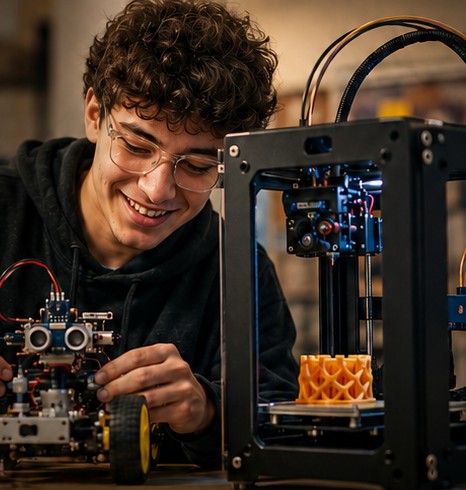
Robotics: Build, Move & Explore
Explore simple machines, movement, sensors, and controls through guided building and creative challenges. Participants plan what a robot should do, try a sequence of instructions, observe the result, and make changes.
- Build or adapt a simple robotics project
- Explore movement, sensing, and cause and effect
- Test a route or task and adjust one step at a time
- Take turns building, operating, observing, and sharing discoveries
3D Design & Printing: From Idea to Object
Learn how a digital model becomes a physical object. Participants explore shapes, scale, materials, and design choices while creating a simple project connected to their interests.
- Sketch an idea and turn it into a basic 3D model
- Personalize a nameplate, token, game piece, or small invention
- Explore how models are prepared for printing through a guided demonstration
- Review the result and decide what to change in the next version
Game Development: Imagine, Design, Build & Play
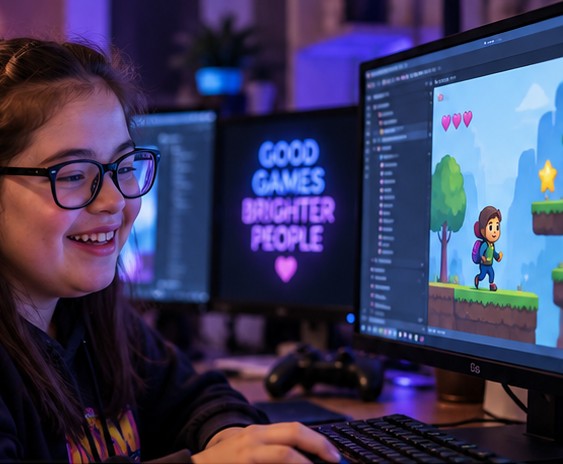
Move from enjoying games to making creative decisions about them. Participants explore goals, rules, challenges, and what makes a game fun, then use accessible tools to develop a simple game or interactive scene.
- Brainstorm an idea and create a simple storyboard
- Design characters, settings, goals, and player choices
- Explore guided AI-assisted tools for game assets, simple logic, and testing
- Playtest, give feedback, and improve the experience
Connected Creative Projects
The three areas can work together: design a game world, model a collectible from it, or build a robot challenge inspired by its story. Participants choose a manageable next step and build toward something they can demonstrate and explain.
Example Activities
- Guide a robot through a participant-designed obstacle course
- Design a personalized token or game piece for a 3D-printing project
- Create a character and build a small world around its story
- Make a simple collect-and-finish game with a clear goal
- Test a partner’s creation and offer one helpful suggestion
- Record a short demonstration explaining what you made and how it works
Outcomes & Skills
- Creative problem solving through planning, testing, and revision
- Confidence using unfamiliar tools and asking for help
- Sequencing, design thinking, and basic digital skills
- Teamwork, communication, and sharing ideas
- A project record such as a design file, model, playable scene, or demonstration
- Pride in making choices and seeing an idea take shape
Who Can Participate
This pathway is a good fit for curious builders, gamers, inventors, artists, and storytellers. Beginners are welcome. Participants can contribute through choosing ideas, drawing, building, testing, giving feedback, or presenting their work.
We discuss interests, communication preferences, accessibility needs, and any support arrangements before starting so that the project and group setting are a good fit.